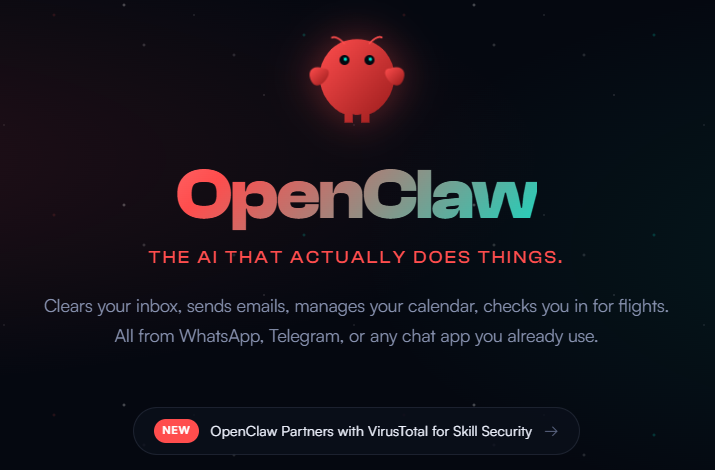
Five weeks ago, Jensen Huang personally stood on stage and crowned OpenClaw as something almost divine. Now, even major companies don’t dare install its latest version. Rapid iteration, constant crashes, downloads cut in half—there’s even “one-click migration” code floating around.
On March 16, at GTC, Huang stood there in his leather jacket and gave OpenClaw his blessing.
OpenClaw is the operating system for personal AI.
Mac and Windows are operating systems for personal computers; OpenClaw is the operating system for personal AI.
While the entire audience stood up and applauded, probably no one expected that this “fastest-growing open-source project in human history” would collapse in just five weeks.
Updates That Break Everything
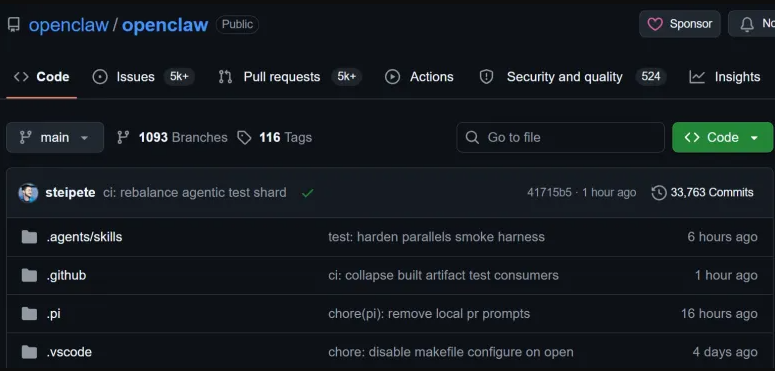
Founder Peter Steinberger, although recruited by OpenAI in February, reportedly still has enough time to continue leading OpenClaw.
Like Peter, dozens of other maintainers are also working on this open-source project in their spare time. They all have full-time jobs—some even run their own startups.
And this group of volunteers is carrying a project with 360,000 stars.
The problem is: they update too fast.
In the past month alone, OpenClaw released more than a dozen versions. Sometimes, updates come every one or two days.
Each update risks breaking the agents that users painstakingly configured.
On Reddit, people keep posting complaints: “Updated, and now OpenClaw is completely broken.”
Messing with OpenClaw often ends up sending me back to Codex and Claude, just trying to figure out why OpenClaw stopped working again.
The same tone appears on GitHub discussions. Some users even created dedicated threads just to say that after a certain update, OpenClaw was completely unusable.
Enterprise Users Don’t Dare Upgrade
The situation is worse on the enterprise side.
Earlier this month, maintainers noticed that NVIDIA and several major domestic companies were still stuck on versions from early March.
It’s not that they don’t want to upgrade—they don’t dare.
All of these companies share the same concern: switching to a new version might trigger serious technical issues.
In other words, the “personal AI operating system” endorsed by Jensen Huang—his own company’s products aren’t even using the latest version.
Recently, some maintainers have started helping these companies migrate step by step.
Over the past week, a few companies began gradual rollouts, but full migration will likely take more time.
Gustavo Madeira Santana, a neuroscience PhD student at Yale and a volunteer maintainer, revealed that the team deliberately held a “no-update week” to focus purely on stability.
“We just want people to stop being scared of updates.”
Anthropic Pulls the Rug
Technical instability is internal damage. External pressure is making it worse.
On April 4, Anthropic officially announced that Claude subscription users can no longer access their quota through third-party tools like OpenClaw.
To continue using it, developers must switch to API usage and pay per request.
Developers call this the “lobster tax.”
Anthropic’s explanation: agent usage patterns are very different from normal chat. Subscription pricing simply can’t cover the cost.
Agents run continuous reasoning loops, retry tasks automatically, and integrate multiple tools. Their compute consumption is far higher than regular conversations.
Claude Code lead Boris Cherny explained the engineering reasons publicly, emphasizing he’s “a friend of open source,” and even submitted PRs to OpenClaw to improve prompt caching efficiency.
But OpenClaw users did the math.
A $200/month Claude subscription could now cost $200 per day via API.
Peter clearly didn’t buy Anthropic’s explanation.
He posted directly: “What a coincidence. First copy popular features into your closed product, then lock open source out.”
Back in January, Anthropic launched its own agent product, Cowork, with a positioning highly similar to OpenClaw.
In March, Cowork added a Dispatch feature—remote agent control and task assignment—exactly one of OpenClaw’s most common workflows.
Product first, pricing change next, less than a month apart. Yes, the timing is that precise.
Six days later, Peter’s Claude account was banned.
At midnight, he received an email: “Hello,” reason: “suspicious signals,” signed by “Anthropic Security Team.”
He posted the screenshot. 1.3 million views, hundreds of comments.
Two hours later, the account was restored.
To this day, Anthropic has never given an explanation.
Banned is banned. What can you do?
Competitors Are Catching Up Fast
Beyond internal and external pressure, competitors are closing in.
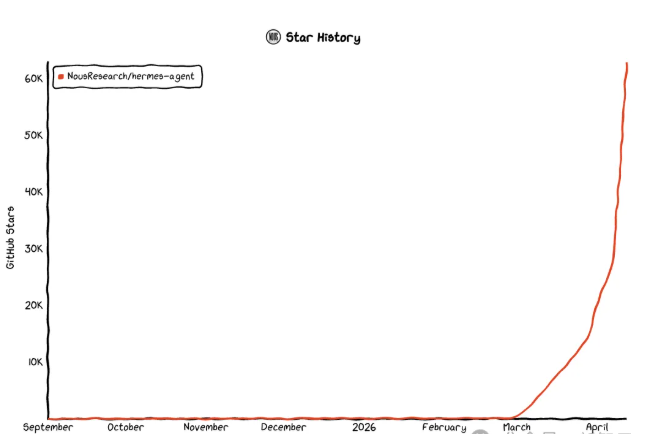
Nous Research launched its agent tool Hermes at the end of February. It has already reached 110,000 stars, though such rapid metrics often spark debates about the fake star economy on GitHub.
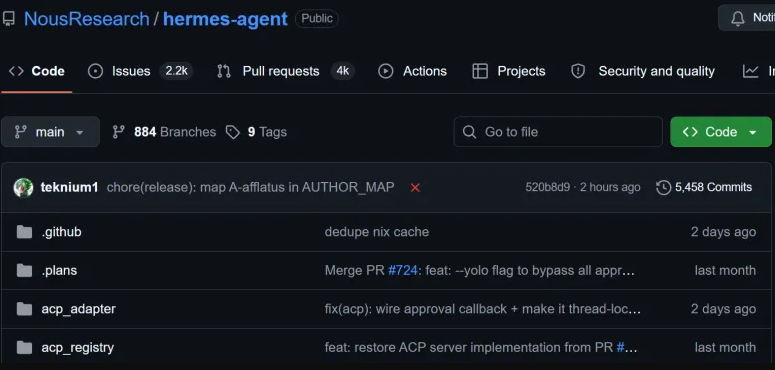
According to ClawCharts, Hermes has recently surpassed OpenClaw in contributor growth.
By mid-April, Hermes’ weekly star growth rate was about three times that of OpenClaw.
Even more striking, Hermes v0.8.0 includes a built-in command: “hermes claw migrate.”
Moving from OpenClaw to Hermes takes just one line of code.
Formerly enthusiastic users are leaving.
One user wrote: “Switching to Hermes is the smartest decision I’ve made.”
Another said: “I’m finally doing real work instead of debugging.”
Hermes has only released 6 versions, while OpenClaw has released 82. And three Hermes versions didn’t even run. Fewer updates doesn’t automatically mean stability.
Gradient partner Darian Shirazi said OpenClaw is “too heavy to use,” and its security is questionable, so he switched to competitors like Town.
Honestly, aside from engineers and tinkerers, it’s hard to say who is still using OpenClaw now.
NPM download data confirms the decline.
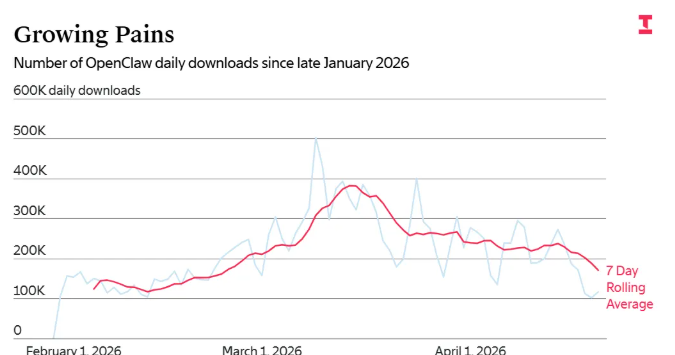
Since its mid-March peak, weekly downloads have been cut in half, falling back to early March levels.
Volunteers Are Reaching Their Limit
All of this pressure points to a deeper issue:
A strategic divide among maintainers.
One group advocates a traditional product development approach: fixed release cycles, strict quality control, formal communication with enterprise users.
The other group fears this will kill OpenClaw. In their view, the personal agent space evolves too fast—what worked a few days ago may need to be scrapped today. Traditional release cycles don’t fit. Rigid rules would suffocate the hacker spirit of rapid experimentation.
This conflict isn’t new in open source.
Linux went through a similar phase in the early 90s. Eventually, it introduced long-term support (LTS) versions—stable core architecture that enterprises could rely on for years.
Shirazi առաջարկed another idea: build a paid “pro version” alongside the open-source version.
Many open-source projects follow this path, using commercial incentives to refine the product.
From Hype to Crisis in Three Months
Looking back at the timeline:
January 30 — Clawdbot renamed to OpenClaw by community vote
February 14 — Peter joins OpenAI; OpenClaw handed to a foundation
March 3 — Surpasses React to become the most starred project in GitHub history
March 16 — Jensen Huang crowns it at GTC: “Every company needs an OpenClaw strategy”
Late March — Anthropic begins restricting Claude usage via OpenClaw
April 4 — Pricing change announced; “lobster tax” implemented
April 10 — Peter’s account banned; restored two hours later after massive attention
Mid-April — Hermes surpasses in contributors; NPM downloads halved
From “the most successful open-source project in human history” to being squeezed on all sides—just five weeks apart.
Linux took thirty years to go from a hacker toy to enterprise infrastructure.
OpenClaw reached the same crossroads in just three months.
The difference is, this time, no one is going to give it thirty years.