LLM

Explore large language models (LLMs) like GPT, Claude, and Gemini. DeepInsightAI covers AI models, capabilities, benchmarks, and real-world applications.

hy3 preview launch

Hy3 Preview by Tencent: Real-World AI Breakthrough in Agents, Coding & Reasoning

Just now, Yao Shunyu led the team to “rebuild” Hunyuan, and the first large model has gone live. Just now, Tencent Hy3 preview has arrived. This is the first version of Hy3 released after Tencent’s Hunyuan team restarted from architecture and infrastructure. The initial batch of models is relatively small in size, positioned toward practicality. It’s also worth noting that Hy3 preview is the first major result after Yao Shunyu returned to China and joined Tencent. It follows his idea of the “second half of AI,” where the Hy3 model is refined and improved within Tencent’s real business and complex scenarios, focusing on effectiveness and practicality in real-world use cases. […]

Hy3 Preview by Tencent: Real-World AI Breakthrough in Agents, Coding & Reasoning 続きを読む »

qwen 3.6 isn’t just another open model

Qwen 3.6 Isn’t Just Another Open Model — It’s the First Time Local AI Feels Actually Usable

Over the past few weeks, Reddit has quietly become the best early signal for how Qwen 3.6 performs in the real world — not benchmarks, not launch blogs, but messy, hardware-constrained, toolchain-dependent usage. Across r/LocalLLaMA, r/LocalLLM, and r/Qwen_AI, one pattern stands out: People aren’t asking “Is it smart?” anymore.They’re asking: “Can I actually use this for real work without wasting time?” This article distills those discussions into concrete, experience-backed insights — with real setups, real numbers, and real tradeoffs. The Breakthrough Isn’t Intelligence — It’s Reduced Friction For years, local models have suffered from a hidden tax: One Reddit user summarized the shift with Qwen 3.6: “This is the first

Qwen 3.6 Isn’t Just Another Open Model — It’s the First Time Local AI Feels Actually Usable 続きを読む »

anthropic mythos leak explained

Anthropic Mythos Leak Explained: Security Breach, AI Risk, and What It Means

The Anthropic “Mythos” leak was not a traditional data breach—it was an unauthorized access incident involving a highly restricted cybersecurity-focused AI model. Based on aggregated Reddit discussions, verified reports, and real-world security patterns, the event reveals a deeper issue: AI systems with offensive capabilities are advancing faster than the infrastructure designed to control them. What Happened in the Anthropic Mythos Leak? The incident surfaced when users reported that Anthropic’s internal model “Mythos” (Claude Mythos Preview)—originally restricted to enterprise and government partners—was accessed by unauthorized individuals. Verified Facts from the Incident What Was NOT Leaked 👉 Instead: This was an access control failure, not a system compromise. Why Mythos Is Considered

Anthropic Mythos Leak Explained: Security Breach, AI Risk, and What It Means 続きを読む »

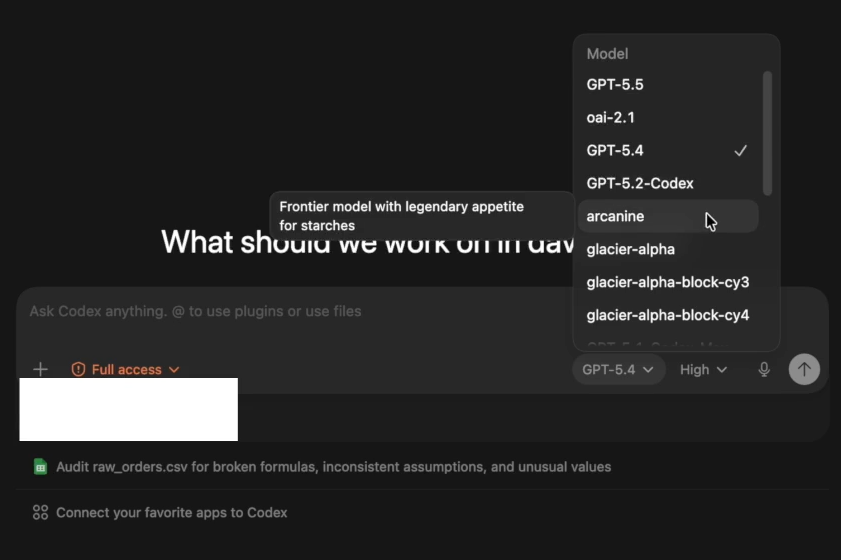
openai codex model leak what it reveals about gpt 5.5 and hidden models

OpenAIコーデックスのモデルリーク:GPT-5.5と隠しモデルについて明らかになったこと

The recent OpenAI Codex model leak was not a breach of model weights or data—it was a UI-level exposure that briefly revealed internal model names like GPT-5.5, Arcanine, and Glacier-alpha. Based on aggregated Reddit discussions and real user observations, this incident strongly suggests that OpenAI is actively testing multiple next-generation models behind the scenes, particularly focused on agent-based workflows, long-context memory, and advanced reasoning systems. What Exactly Happened in the OpenAI Codex Leak? The leak originated from a Reddit post where a user captured a model selection dropdown inside Codex that temporarily exposed internal model names not publicly announced. Key Observations from the Leak Why This Matters From an engineering

OpenAIコーデックスのモデルリーク:GPT-5.5と隠しモデルについて明らかになったこと 続きを読む »

claude opus 4.7 adaptive thinking what it is, how it works, and why users are divided

Claude Opus 4.7 Adaptive Thinking: What It Is, How It Works, and Why Users Are Divided

Claude Opus 4.7 Adaptive Thinking is a system where the model automatically decides how much reasoning effort to use based on task complexity. It replaces manual “extended thinking” controls with dynamic allocation, aiming to balance speed, cost, and accuracy. While this improves efficiency in structured tasks like coding, it reduces user control and can lead to inconsistent performance in long or complex workflows. Source: Claude Opus 4.7 official documentation What Is Adaptive Thinking in Claude Opus 4.7? Adaptive Thinking is a reasoning framework where the model dynamically adjusts how deeply it processes a prompt. Instead of forcing a fixed “deep thinking” mode, the model: In practical terms, this means: From

Claude Opus 4.7 Adaptive Thinking: What It Is, How It Works, and Why Users Are Divided 続きを読む »

claude opus 4.7 pricing

Claude Opus 4.7 Pricing: Is It Actually More Expensive?

Short answer:Claude Opus 4.7 is not officially more expensive per token, but in real-world usage it often costs more because it generates and consumes significantly more tokens—especially on complex tasks. The result is a higher effective cost per task, not a higher listed price. Claude Opus 4.7 Pricing at a Glance Claude Opus 4.7 keeps the same listed pricing as earlier Opus versions (4.6, 4.5, and 4.1). The key difference is not the price itself, but how input text is converted into tokens—due to an updated tokenizer that can increase token counts for the same prompt. Pricing and Key Changes Category Claude Opus 4.7 Input Cost $5 per 1M tokens

Claude Opus 4.7 Pricing: Is It Actually More Expensive? 続きを読む »

クロード op.4.7 vs op.4.6

クロード・オーパス4.7 vs オーパス4.6:どちらが実戦に適しているか?

Short answer:Opus 4.6 currently delivers higher reliability, lower cost, and better one-shot success rates in real-world coding workflows, while Opus 4.7 shows potential in open-ended tasks but requires more tuning, higher token budgets, and more retries to reach similar outcomes. Opus 4.7 vs Opus 4.6: Real-World Performance vs Benchmarks Most comparisons between Opus 4.7 and Opus 4.6 rely on controlled benchmarks. However, when evaluated inside actual development workflows over multiple days, a different picture emerges. In a multi-day side-by-side evaluation using thousands of real coding interactions: This gap highlights a critical distinction:benchmark gains do not necessarily translate into production efficiency. In practice, real workflows introduce noise—partial context, evolving requirements, and

クロード・オーパス4.7 vs オーパス4.6:どちらが実戦に適しているか? 続きを読む »

クロード op.4.7

クロード・オーパス4.7レビュー:何が変わり、なぜそれが重要なのか

Claude Opus 4.7 Reclaims Top Rankings in AI Benchmarks This week, Anthropic released Claude Opus 4.7. It has climbed back to the top in two of the most closely watched public benchmarks. On Artificial Analysis’s overall intelligence leaderboard, Opus 4.7 scored 57, up from 53 for Opus 4.6, placing it firmly in the top tier. On Arena.ai’s latest Code Arena results, Opus 4.7 ranked first with a score of 1583—34 points higher than Opus 4.6 Thinking at 1549. It also led the nearest non-Anthropic model by a noticeable margin, and took first place in both the React and HTML subcategories. Benchmark Results: How Claude Opus 4.7 Compares to Opus 4.6

クロード・オーパス4.7レビュー:何が変わり、なぜそれが重要なのか 続きを読む »

上部へスクロール