Si è appena verificato un momento storico. Un rapporto finanziario che merita un posto nella storia dell’economia è caduto come una bomba in acque profonde, mandando completamente in frantumi il mito della crescita di OpenAI.
Il momento è arrivato: Anthropic, questa “Avengers Alliance” formata da ex dipendenti di OpenAI, ha ufficialmente raggiunto $30 miliardi di fatturato annuo, superando in un colpo solo i $24 miliardi di OpenAI.
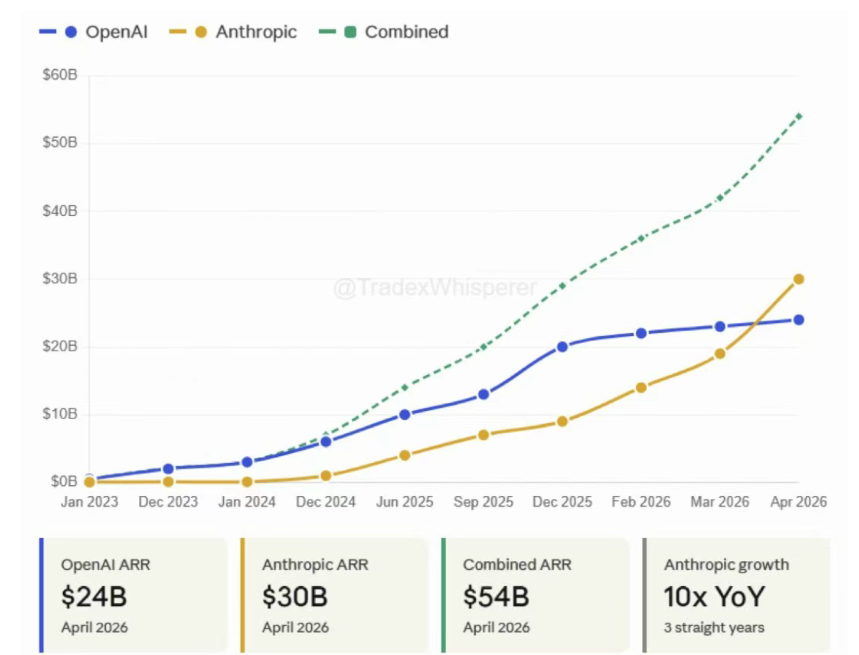
Oggi il *Wall Street Journal* ha rivelato una cifra sbalorditiva che ha lasciato senza fiato tutta la Silicon Valley: il fatturato annuo ricorrente (ARR) di Anthropic ha superato i $30 miliardi.
All'inizio del 2025, l'ARR di Anthropic era pari a soli $1 miliardi.
In 15 mesi si è moltiplicato per 30.
In soli 15 mesi, il fatturato annualizzato è schizzato da $1 miliardi a $30 miliardi: una crescita così vertiginosa non ha precedenti nella storia imprenditoriale americana. Fa sembrare persino gli esordi di Google e Meta un vero e proprio passo da lumaca.
L'azienda che ha registrato la crescita più rapida nella storia imprenditoriale degli Stati Uniti non è OpenAI, né NVIDIA, bensì un'azienda fondata nel 2021 da ex dipendenti di OpenAI.
Il trono del primato americano nel campo dell’intelligenza artificiale è ufficialmente passato in altre mani.
Ora OpenAI viene derisa dai media stranieri come “il fratellino di Anthropic”. Sia il suo fatturato che la sua valutazione sono stati superati, e il panico interno ha innescato una fase di “imitazione sfrenata”.
A peggiorare ulteriormente la situazione, lo stesso giorno il WSJ ha sferrato un altro colpo: OpenAI non è riuscita a raggiungere il proprio obiettivo interno di 1 miliardo di utenti attivi settimanali. Il suo direttore finanziario ha espresso preoccupazioni riguardo alla capacità dell’azienda di sostenere una spesa per risorse di calcolo pari a $600 miliardi, e sono emerse divergenze tra l’amministratore delegato e il direttore finanziario in merito alla strategia.
L'inchiostro sul round di finanziamento da $122 miliardi non si è ancora asciugato, eppure sono già divampati i primi focolai di tensione interna.
Come ha fatto Anthropic a raggiungere un fatturato di $30 miliardi?
Alla fine del 2025, l’ARR di Anthropic si attestava ancora intorno a $9 miliardi. Ad aprile di quest’anno, l’azienda ha confermato ufficialmente di aver superato i $30 miliardi.
In soli quattro mesi, è più che triplicato di nuovo.
Questa accelerazione è semplicemente terrificante.
Ma come è successo esattamente che Antropico raggiungere un fatturato annualizzato pari a $30 miliardi?
Perché OpenAI, con 900 milioni di utenti attivi settimanali, è stata superata in termini di fatturato da un nuovo concorrente?
La risposta si può riassumere in tre parole: mercato aziendale.
Sì, l'80% del fatturato di Anthropic proviene dai clienti aziendali.
Conta 300.000 clienti aziendali. Otto delle prime dieci aziende della classifica Fortune utilizzano Claude. Oltre 1.000 clienti di rilievo pagano ciascuno più di $1 milione all’anno — e tale cifra è raddoppiata in soli due mesi.
Motore di abbonamento B2B vs imbuto di traffico C-End
La situazione imbarazzante in cui si trova OpenAI è quella di essere caduta nella classica trappola dell’era di Internet: “aumentare il fatturato senza aumentare i profitti”.”
Tra i suoi 900 milioni di utenti, la maggior parte sono “free rider” che utilizzano ChatGPT per i compiti, le relazioni settimanali o semplicemente per chiacchierare in modo informale. Il mantenimento di questo traffico comporta costi di inferenza estremamente elevati.
Si tratta di due modelli di business completamente diversi:
- Un funnel di traffico dal lato dei consumatori: ampia base di utenti, basso tasso di pagamento
- Un motore di abbonamenti B2B: meno utenti, ma ricavi elevati per cliente
Ora il vero risultato di mercato è chiaro: il B2B ha vinto.
Il vantaggio di Anthropic in termini di efficienza dei costi
Ancora più interessante è il modo in cui Anthropic spende i propri fondi.
Pur avendo raggiunto questo livello di successo, il suo investimento nella formazione dei modelli è pari solo a un quarto di quello di OpenAI.
In termini di ritorno sull'investimento tecnologico, non si tratta di una vittoria di misura, ma di un vero e proprio dominio.
Mentre Sam Altman sta ancora raccogliendo fondi per un “progetto informatico da un trilione di dollari”, il suo ex collaboratore Dario Amodei ha portato Claude, in sordina, a superare OpenAI.
“La vendetta del disertore”: la fuga di Dario Amodei
La trama più avvincente nel mondo degli affari è spesso “il ritorno dell’esiliato”.”
Nel 2021, a causa di divergenze sulla crescente commercializzazione di OpenAI e sulla sua filosofia in materia di sicurezza, Dario Amodei ha lasciato l’azienda insieme alla sorella Daniela e a un gruppo di ricercatori chiave per fondare Anthropic.
All’epoca, il settore li derideva addirittura definendoli idealisti che stavano “commettendo un suicidio professionale”.”
All’epoca, probabilmente Sam Altman non ci fece molto caso.
Quattro anni dopo, questi “disertori” hanno risposto con un fatturato di $30 miliardi.
Enterprise Power: Perché i clienti B2B pagano
Ad aprile 2026, oltre 1.000 clienti aziendali versano ad Anthropic più di $1 milioni all’anno.
Amazon, Google, Salesforce, Accenture e Deloitte non sono solo investitori: sono utenti che pagano cifre ingenti.
Claude Code è diventato un'arma fondamentale.
Gli sviluppatori aziendali lo utilizzano per la programmazione, la progettazione dell'architettura e l'implementazione. È profondamente integrato nei flussi di lavoro: un requisito imprescindibile.
Una volta adottati, i costi di passaggio sono estremamente elevati e i tassi di rinnovo sono sorprendenti.
La sicurezza come vantaggio competitivo
In cosa eccelle davvero Anthropic?
Ha trasformato la “sicurezza” da semplice slogan di marketing a vero e proprio vantaggio competitivo.
Per i clienti aziendali dei settori finanziario, sanitario e legale, il timore maggiore non è che l’intelligenza artificiale non sia abbastanza intelligente, ma chi si assuma la responsabilità quando qualcosa va storto.
Il framework di intelligenza artificiale costituzionale di Anthropic, la ricerca sull’interpretabilità e l’impegno a favore di un impiego responsabile sono diventati punti di forza determinanti nelle decisioni di acquisto dei CTO.
La crisi interna di OpenAI
Secondo il WSJ, ChatGPT non è riuscito più volte a raggiungere il proprio obiettivo interno di 1 miliardo di utenti attivi settimanali, e anche i ricavi sono rimasti al di sotto delle aspettative in diversi mesi.
Ma la concorrenza esterna è solo una parte del problema: le crepe interne potrebbero rivelarsi fatali.
Le tensioni tra Sam Altman e la direttrice finanziaria Sarah Friar si sono inasprite.
Friar, uno dei massimi esperti finanziari provenienti da Square e Nextdoor, avrebbe dovuto guidare OpenAI attraverso il suo imponente finanziamento da $122 miliardi e la potenziale quotazione in borsa, con l’obiettivo di raggiungere una valutazione di $1 trilione.
A quanto pare, invece, ora sarebbe ormai vicina al punto di rottura.
La scommessa da $600 miliardi nel settore del calcolo
Altman ha stipulato contratti per servizi di calcolo per un valore fino a $600 miliardi.
Anche con un finanziamento di $122 miliardi, al ritmo attuale di consumo delle risorse, potrebbe bastare solo per tre anni.
Friar ha lanciato un avvertimento interno: se la crescita dei ricavi non accelera, OpenAI potrebbe non essere in grado di pagare le future fatture relative alle risorse di calcolo.
È stata addirittura esclusa da importanti riunioni sulle infrastrutture.
Andamento della redditività: un divario triennale
Secondo il WSJ e le società di analisi del settore SaaS:
- I costi annuali di elaborazione di OpenAI potrebbero raggiungere $121 miliardi entro il 2028
- Il costo massimo di addestramento di Anthropic è di circa $30 miliardi
È più o meno un quarto.
Cosa significa?
Per ogni $1 speso, Anthropic ottiene ciò che a OpenAI costa $4.
E il divario in termini di tempistiche di redditività è ancora più critico:
- Anthropic: flusso di cassa positivo entro il 2027
- OpenAI: rinviato al 2030
Tre anni: nel campo dell’intelligenza artificiale, è un’intera era.
Il cambiamento strategico: OpenAI inizia a imitare
Anthropic ha recentemente stretto una partnership con Google e Broadcom per garantire la sicurezza dell'infrastruttura informatica.
Nel frattempo, il consiglio di amministrazione di OpenAI si sta chiedendo se la strategia di espansione di Altman sia sostenibile.
Si sta diffondendo il panico interno.
Il Chief Revenue Officer ha messo in guardia direttamente i dipendenti riguardo ad Anthropic.
A livello più simbolico, OpenAI ha iniziato a modificare la propria strategia:
- Progetti di taglio come Sora
- Passaggio completo al settore B2B
- Prodotti simili a Claude Code
Quando inizi a copiare la strategia del tuo concorrente, significa che hai ammesso una cosa: la sua strada è quella giusta, la tua era sbagliata.
Il finanziamento da $122 miliardi contro un futuro da $600 miliardi
Solo poche settimane fa, OpenAI ha concluso un round di finanziamento sorprendente:
$122 miliardi raccolti, con una valutazione che raggiunge i $800 miliardi.
Eppure, poco dopo, il WSJ ha rivelato la verità:
- Fatturato annuo: circa $24 miliardi
- Costi operativi: oltre $20 miliardi
- Margine di profitto: estremamente ridotto
E all’orizzonte si profila il progetto “Stargate”, con un investimento complessivo di $600 miliardi.
$122 miliardi contro $600 miliardi sembrano più che altro un antidolorifico temporaneo.
Capital Loop e la reazione dei mercati
Si è creato un circolo vizioso preoccupante dal punto di vista finanziario:
I produttori di chip investono in OpenAI → OpenAI acquista chip → la potenza di calcolo supporta gli utenti gratuiti → sono necessari ulteriori finanziamenti per sostenere la crescita.
Nel frattempo, la valutazione di Anthropic si sta avvicinando a $1 trilioni.
Alcuni dei primi investitori di OpenAI stanno iniziando a vacillare.
Titoli come Oracle e CoreWeave hanno già registrato dei ribassi.
Il mercato sta esprimendo il proprio giudizio con denaro vero.
La domanda fondamentale: IA per i consumatori o infrastruttura aziendale?
Questa battaglia mette in luce una realtà più profonda del settore.
OpenAI ha scelto il modello di Internet: acquisire prima gli utenti, pensare alla monetizzazione in un secondo momento.
Anthropic ha scelto il modello del software aziendale: creare valore prima di tutto, espandersi in un secondo momento.
Si tratta di due percorsi fondamentalmente diversi.
Il fatturato di $30 miliardi di Anthropic rappresenta una scommessa sulle infrastrutture aziendali.
Per ora, il mercato gli è favorevole.
La guerra dell'intelligenza artificiale è ben lungi dall'essere finita
Un giorno, OpenAI o Anthropic potrebbero trovare una cura per il cancro o rivoluzionare il mondo.
Ma per ora hanno ancora delle bollette da pagare.
Nel 2021, quasi nessuno credeva in Dario Amodei.
Quattro anni dopo, Anthropic non solo era sopravvissuta, ma aveva addirittura superato la concorrenza.
Se potesse tornare indietro, Sam Altman impedirebbe quella “defezione”?
Probabilmente no. E anche se fosse così, non avrebbe importanza.
Anthropic non si è limitata ad assumere persone: ha individuato una strada che OpenAI aveva trascurato.
La battaglia per il dominio dell'intelligenza artificiale è tutt'altro che conclusa.
OpenAI ha ancora le carte in mano: GPT-5, l’ecosistema di Microsoft e la più grande base di utenti di IA al mondo.
Ma gli equilibri di potere sono cambiati.
Altman si trova ora sotto pressione da tutte le parti: cause legali, ribellione interna, scrutinio da parte degli investitori.
Questa epopea dedicata all’intelligenza artificiale è appena entrata nella sua seconda metà.
Chi avrà l'ultima parola?
Una cosa è certa:
L'era del monopolio di OpenAI è ufficialmente giunta al termine.