Anthropischer Wert nähert sich $900 Mrd.
Eine Tiefseebombe in der KI-Welt.
Am 29. April wurde berichtet, dass Anthropisch verhandelt über eine neue Finanzierungsrunde mit einer Bewertung, die $900 Milliarden übersteigen könnte.
Wenn der Deal zustande kommt, wird dieses Unternehmen, das vor weniger als vier Jahren gegründet wurde, OpenAI mit einem Schlag übertreffen und das wertvollste KI-Einhorn der Welt werden.
$900 Milliarden.
Was bedeutet diese Zahl?
Auf dem chinesischen A-Aktienmarkt ist sie höher als die Marktkapitalisierung von Kweichow Moutai. Im Silicon Valley stößt es den Bewertungsthron um, den OpenAI ein Jahrzehnt lang aufgebaut hat.
Noch interessanter ist der Zeitrahmen. Noch vor ein paar Monaten wurde Anthropic mit $60 Milliarden bewertet.
Google und Amazon investierten mit einer Bewertung von $350 Mrd. und verpflichteten sich zu einem Gesamtbetrag von bis zu $65 Mrd.. Von $60 Mrd. auf $900 Mrd. in weniger als einem Jahr - eine 15-fache Steigerung.
Kapital lügt nicht. Wenn das klügste Geld der Welt in dieselbe Richtung fließt, hat sich definitiv etwas verändert.
Was hat sich also geändert?
Die Antwort ist verblüffend.
Die Nutzer stimmen mit den Füßen ab
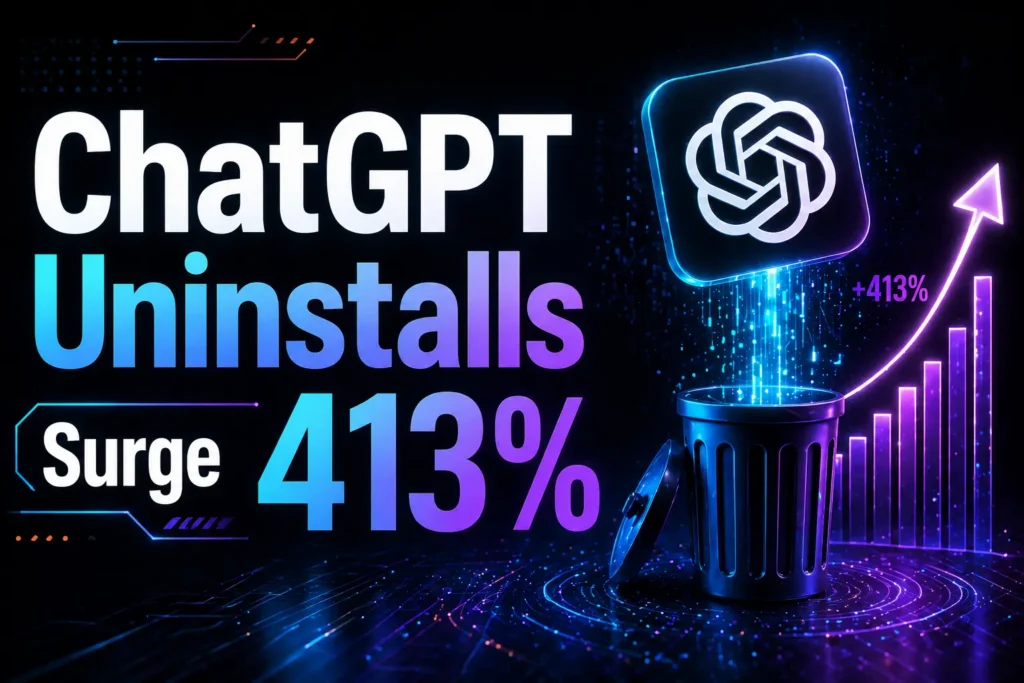
Laut dem Marktforschungsunternehmen Sensor Tower stieg die Deinstallationsrate von ChatGPT im April um 132% im Vergleich zum Vorjahr. Im Vormonat waren es noch mehr, nämlich 413%.
Zu einem bestimmten Zeitpunkt erreichte die Deinstallationswelle von ChatGPT 563%. Im gleichen Zeitraum stiegen die Downloads von Claude in einer einzigen Woche um 199%.
In mehreren Ländern erreichte Claude die Spitze der Charts der kostenlosen iPhone-Apps.
In den USA übertrafen die täglichen Downloads von Claude zum ersten Mal ChatGPT. Am 28. Februar kletterte es auf Platz #1 der kostenlosen App Store Rangliste und hielt diese Position bis zum 2. März. Innerhalb einer Woche machte es einen Sprung um mehr als 20 Plätze. Claude führte auch die Rangliste der kostenlosen iPhone-Apps in Belgien, Kanada, Deutschland, Luxemburg, Norwegen und der Schweiz an.
Die Nutzer stimmen mit den Füßen ab. Und sie treten dabei das Gaspedal durch.
OpenAI: Die Risse beginnen von innen
Oberflächlich betrachtet, sieht OpenAI immer noch gewaltig aus.
Die GPT-Reihe hat Hunderte von Millionen von Nutzern. Codex hat gerade eine neue Welle der Aufregung ausgelöst. Das Stargate-Projekt beansprucht eine Investition von $500 Milliarden für den Aufbau einer KI-Infrastruktur.
Aber Imperien zerbrechen oft zuerst von innen.
Wenn der Nutzerverlust eine oberflächliche Wunde ist, dann ist die Verkleinerung von “Stargate” ein gebrochener Knochen.
Berichten zufolge ist der tatsächliche Fortschritt von Stargate weit weniger beeindruckend, als es die Folien vermuten ließen.
$500 Milliarden. Zehn Kernkraftwerke. Der einzige Weg in die Zukunft der Menschheit. Jetzt sieht es eher nach einem verkleinerten Mietvertrag aus.
Das Projekt im Vereinigten Königreich ist gestoppt.
Der Norwegen-Projektschnitt.
Der texanische Flaggschiff-Stützpunkt - verlassen.
Altman nennt es “Flexibilität”. Die Partner nennen es “den Teppich herausziehen”. SoftBank ist frustriert. Oracle kalkuliert neu. Microsoft sammelt im Stillen die Scherben auf.
Der Subtext ist klar: Sobald OpenAI anfängt, sich aus der Verantwortung für die Infrastruktur zurückzuziehen, verliert sie die Kontrolle über die physische Welt.
Finanzierungsfristen, Standorte für Rechenzentren, Koordination der Partner - jeder Schritt zieht sich hin.
“Die Fortschritte sind viel langsamer als erwartet”.”
Talentabbau im Stillen
Gleichzeitig erlebt OpenAI einen stillen Verlust von Talenten.
Dario Amodei - Gründer und CEO von Anthropic - war früher Vizepräsident für Forschung bei OpenAI.
Er ist nicht nur selbst gegangen. Er nahm eine Gruppe der wichtigsten Sicherheitsforscher von OpenAI mit.
Zu seinem Weggang sagte er schlicht und einfach: “Anstatt zu bleiben und über die Vision eines anderen zu streiten, ist es besser, sich Leute zu nehmen, denen man vertraut, und seine eigene Vision zu entwickeln.”
Diese Art von Ausstieg hat nicht aufgehört.
In den vergangenen zwei Jahren sind wichtige Mitglieder der Ausrichtungs- und Sicherheitsteams von OpenAI zu Anthropic gewechselt.
Was ist das wertvollste Gut eines Unternehmens?
Keine Nutzerzahlen. Nicht die Bewertung. Es sind die Menschen, die die nächste Generation von Modellen definieren können.
Wenn diese Menschen sich entschließen zu gehen, wird die Richtung selbst zur Antwort.
Anthropisch: Vom “Sicherheitslabor” zum “wertvollsten Einhorn”
Der Aufstieg von Anthropic folgt nicht dem üblichen Silicon-Valley-Drehbuch.
Es begann nicht damit, Geld zu verbrennen, um Nutzer zu gewinnen.
Es begann mit einem Papier über KI-Sicherheit. Der Kerngedanke war die “konstitutionelle KI”, d. h. die Verwendung einer Verfassung zur Einschränkung des Modellverhaltens.
Lange Zeit herrschte im Silicon Valley die Meinung vor: Diese Leute sind zu idealistisch, sie werden sich nicht durchsetzen.
Dann wurde Claude 3.5 Sonnet veröffentlicht.
Seine Kodierungsfähigkeit übertraf GPT-4o. Sein Verständnis für lange Zusammenhänge lag weit vorne. Die Halluzinationsraten sanken deutlich.
Über Nacht hat sich die Entwicklergemeinschaft verändert.
Reddit, Hacker News, X - überall hat man den gleichen Satz gesehen:
“Ich habe ChatGPT Plus gekündigt und bin zu Claude gewechselt.”
Nicht eine Person. Tausende von Menschen.
Unternehmensverlagerung in Richtung Claude
Noch wichtiger ist die Unternehmensseite.
Bei AWS hat sich die API-Nutzung von Claude in den letzten sechs Monaten mehr als verdoppelt.
Immer mehr Unternehmen verlagern ihr Kerngeschäft von GPT auf Claude - nicht weil es billiger ist, sondern weil es besser funktioniert.
Google sah dies und investierte. Amazon erkannte es und investierte ebenfalls. Gemeinsam investierten sie $65 Milliarden - nicht in die Gegenwart von Anthropic, sondern in seine Fähigkeit, die nächste Generation der KI zu definieren.
Verliert OpenAI wirklich?
Nicht so schnell.
GPT-5 wird weiterhin mit erstaunlicher Geschwindigkeit weiterentwickelt. Version 5.5 wurde gerade veröffentlicht, und in den Backend-Protokollen tauchen bereits Spuren von 5.6 auf.
Codex als Agententool ist auf breiter Front auf dem Vormarsch. Der Graben im Entwickler-Ökosystem kann nicht über Nacht überwunden werden.
Eine weitere Karte von OpenAI ist die Skalierung.
Hunderte von Millionen monatlich aktiver Nutzer. Tiefe Integration mit Microsoft. Unternehmenskunden weltweit.
Diese Vorteile werden nicht durch eine einzige finanzielle Schlagzeile zunichte gemacht.
Die Geschichte zeigt, dass das Übertreffen der Bewertung nicht über den Gewinner entscheidet.
Als Facebook 2012 an die Börse ging, dachten viele, dass die sozialen Ambitionen von Google am Ende seien. Zehn Jahre später war das Suchimperium von Google nie wirklich bedroht.
Darin liegt die Brutalität der KI-Rasse:
Der heutige Thron zählt möglicherweise nicht mehr, wenn das nächste Modell herauskommt.
Eine Verschiebung der Machtstruktur
Ziehen Sie sich zurück, und es geht nicht nur darum, wer gewinnt oder verliert.
Es ist eine Geschichte, in der die Machtstruktur der KI-Industrie umgeschrieben wird.
Vor zwei Jahren war OpenAI der einzige Superstar.
Vor einem Jahr begann Googles Gemini mit der Aufholjagd.
Heute hat Anthropic die Spitze der Bewertung erreicht.
In der Zwischenzeit verbrennt xAI Geld, Meta rührt die Werbetrommel, und Open-Source-KI schließt die Lücke.
Der Gewinner ist nicht mehr singulär.
Die KI entwickelt sich von der Dominanz eines Einzelnen zu einer Fragmentierung unter vielen.
Die einzige Variable, auf die es ankommt
In diesem chaotischen Kampf gibt es nur eine Variable, die wirklich über den Ausgang entscheidet:
Wer kann das Modell der nächsten Generation zuerst bauen?.
Nicht, wer die besseren Dias hat. Nicht, wer mehr Geld einnimmt.
KI ist keine Zauberei. Es ist Schwerindustrie.
Es braucht astronomischen Strom. Absolute Glaubwürdigkeit. Skrupellose finanzielle Disziplin.
Die Bewertung von Anthropic mit $900 Mrd. ist im Kern eine Marktwette:
Der nächste “iPhone-Moment” liegt vielleicht nicht in den Händen von OpenAI.