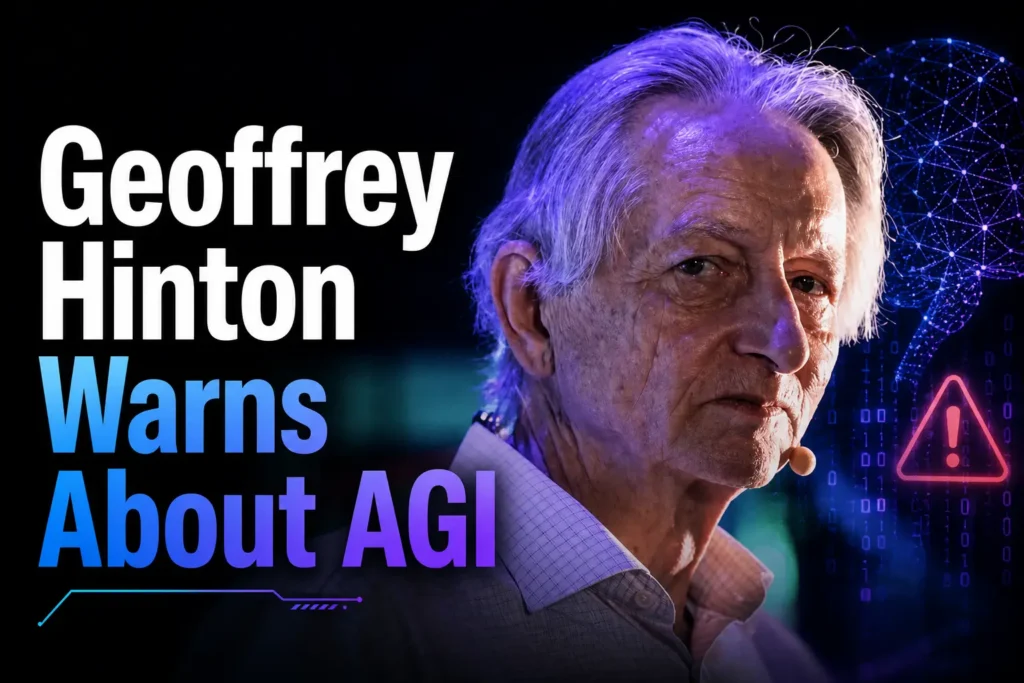
Als der 78-jährige Geoffrey Hinton vor der Kamera saß und dies vor Hunderten von Teilnehmern sagte, wurde es im gesamten Saal für einige Sekunden still.
“Sie wollen ein superschnelles Auto ohne Lenkrad.”
Kürzlich schlug der diesjährige Nobelpreisträger für Physik 2024 – ein älterer Herr, der seit über einem Jahrzehnt als “Godfather of AI” bezeichnet wird – auf der Global Digital World Conference erneut Alarm für die Menschheit. Fast flehend warnte Hinton:
“Wir wissen nicht, ob Menschen mit superintelligenter KI koexistieren können.”
“Aber wir bauen es.”
Hinton über AGI: Nur 1% zum Thema Sicherheit, 99% zum Thema Beschleunigung
In seiner Rede legte Hinton eine sehr klare Überlegung dar.
Die weltweite KI-Branche wächst mit einer Geschwindigkeit, die in der Geschichte der Menschheit beispiellos ist. Nach Angaben der UNCTAD belief sich der weltweite KI-Markt im Jahr 2023 auf $189 Milliarden und soll bis 2033 auf $4,8 Billionen ansteigen.
Das bedeutet, dass die Menschheit in nur zehn Jahren aus dem Nichts eine Wirtschaftskraft geschaffen hat, die größer ist als Japans BIP.
Und wohin fließt all das Geld?
in den Bau größerer Modelle und die Durchführung umfangreichererer Rechenaufgaben.
Wie sieht es mit der Sicherheit aus?
Hinton nannte eine Zahl: etwa 1%.
Nur etwa 1% der weltweiten F&E-Investitionen im Bereich KI fließen in die Frage: “Wie kann man sicherstellen, dass dabei nichts schiefgeht?”
Sein Kommentar dazu:
“Das ist verrückt.”
Lobbygruppen der KI-Branche, so sagte er, geben viel Geld für Werbung aus, um eine Analogie zu verbreiten: KI sei das Gaspedal, Regulierung die Bremse. Ihre Botschaft lautet: Treten Sie nicht auf die Bremse, das würde uns ausbremsen.
Hinton wies dies rundweg zurück.
“Der Beschleuniger ist der Fortschritt, ganz sicher. Aber Regulierung ist nicht die Bremse – sie ist das Lenkrad.”
“Sie wollen ein schnelles Auto, aber ohne Lenkrad.”
Terry Sejnowski, der neben ihm saß, fügte sofort hinzu:
“Bist du schon mal ein Auto ohne Bremsen gefahren? Dann weißt du, wie schlimm das bergab ist.”
Aber was noch schlimmer ist: Wir haben nicht einmal ein Lenkrad.
Gaspedal bis zum Anschlag. Lenkrad entfernt.
So sieht die tatsächliche Lage im weltweiten Wettlauf um die KI aus.
Von der Preisverleihung bis zu Hintons AGI-Bilanz
Das Thema der Weltdigitalkonferenz 2026 lautete “KI und soziale Entwicklung”.”
Bei dieser Veranstaltung wurden Hinton und Sejnowski für die Erfindung der Boltzmann-Maschine in den 1980er Jahren ausgezeichnet – ein Durchbruch, der später zum Auslöser der Deep-Learning-Revolution wurde.
Die Auszeichnung wurde von Li Deng von Microsoft überreicht, der selbst von dieser Erfindung profitiert hat. Zwischen 2009 und 2010 lud er Hinton zu einer Zusammenarbeit bei Microsoft ein, wo sie Boltzmann-Maschinen zum Vortrainieren groß angelegter Spracherkennungssysteme einsetzten – was zu einem der ersten großen industriellen Erfolge des Deep Learning führte.
In der ersten Hälfte der Sitzung ging es um Wissenschaftsgeschichte, akademische Erfolge und gemeinsame Erinnerungen.
Hinton und Sejnowski erinnerten sich an einen Moment in den 1980er Jahren auf einer Konferenz in Rochester – daran, wie sie das Hopfield-Netzwerk mit dem Simulated-Annealing-Verfahren kombinierten.
Sejnowski erinnerte sich noch genau daran:
“Wir saßen da und wurde uns plötzlich klar, dass wir das Hopfield-Netzwerk ”aufheizen‘ und es so zu einem probabilistischen System machen könnten.“
Hinton fügte noch eine Einzelheit hinzu: Zu dieser Zeit hatte er gerade in San Diego gemeinsam mit David Rumelhart an der Backpropagation unter Verwendung logistischer Einheiten gearbeitet. Und als die Temperatur in das Hopfield-Netzwerk einbezogen wurde, entstanden ebenfalls logistische Einheiten.
Zwei völlig unterschiedliche Wege mündeten in dieselbe mathematische Form.
In der Wissenschaftsgeschichte werden solche Momente als “Kristallisationsmomente” bezeichnet.”
Interessanterweise ist Hinton nach wie vor der Ansicht, dass Boltzmann-Maschinen eleganter sind als Backpropagation.
“Das ist eine viel bessere Idee. Nur nicht besonders praktisch.”
Sejnowski lachte und stimmte zu:
“Es handelte sich bereits um ein generatives neuronales Netzwerk, Jahrzehnte bevor generative KI populär wurde.”
Hinton: “AGI ist ein dummer Begriff”
Als sich die Diskussion auf die allgemeine künstliche Intelligenz (AGI) und gesellschaftliche Risiken verlagerte, schlug Hinton einen völlig anderen Ton an.
Li Deng stellte eine Frage, die sich viele Menschen stellen: Wie definiert man AGI? An welchen Maßstäben lässt sich ihr Eintreffen erkennen?
Hinton nahm kein Blatt vor den Mund:
“AGI ist ein dummer Begriff.”
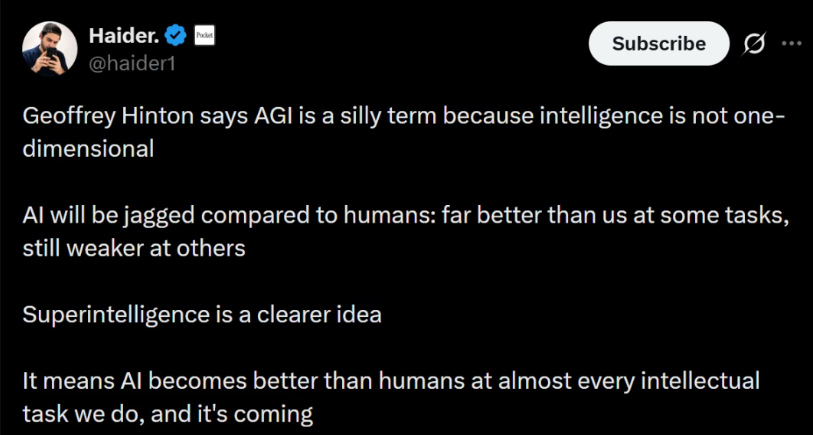
Der Grund dafür ist einfach: Dabei wird davon ausgegangen, dass Intelligenz eindimensional ist, wie bei einem Thermometer – je höher der Wert, desto intelligenter.
“Intelligenz ist jedoch ganz offensichtlich ein äußerst vielschichtiger Begriff.”
“Es gibt keinen einzigen Punkt, an dem KI dem Menschen ebenbürtig ist. Ihre Fähigkeiten im Vergleich zum Menschen sind uneinheitlich – in manchen Bereichen weit über uns, in anderen noch hinter uns zurück.”
Er nannte ein Beispiel: Wenn man heute ein beliebiges großes Modell nach den Steuerfristen in Slowenien oder danach fragt, wie man eine Veranda wasserdicht macht, wird es diese Fragen fließend beantworten.
Was das Allgemeinwissen angeht, hat die KI den Menschen bereits bei weitem übertroffen.
Bei bestimmten Denkaufgaben hat es jedoch noch nicht ganz aufgeholt.
“Der Begriff AGI ist also bedeutungslos.”
Jenseits der AGI: Hinton über Superintelligenz
Welcher Begriff ist also von Bedeutung?
Nach Hintons Ansicht handelt es sich dabei um “Superintelligenz”.”
Die Definition ist eindeutig: Bei fast allen intellektuellen Aufgaben besser zu sein als Menschen.
Und wir glauben, dass es kommen wird.
Dann kam die Kernfrage der gesamten Diskussion:
Wenn die Superintelligenz Einzug hält, werden die Menschen dann noch eine nennenswerte Kontrolle über die von ihnen geschaffenen Systeme haben?
Hinton antwortete:
“Wir wissen nicht, ob wir mit superintelligenter KI koexistieren können.”
“Aber da wir es gerade erst aufbauen, haben wir im Moment noch viel Einfluss darauf.”
“Wir sollten es sorgfältig gestalten, damit wir weiterbestehen und mit ihm koexistieren können.”
In den bekannten Modellen gibt es nur ein einziges Beispiel, bei dem etwas weitaus Intelligenteres freiwillig etwas weitaus Weniger Intelligentem Freiheit gewährt:
Eine Mutter und ihr Baby.
Weil es der Mutter wirklich am Herzen liegt.
Hintons drei Kategorien von KI-Risiken
Hinton unterteilte die Risiken der KI in drei Kategorien.
Vorsätzlicher Missbrauch
Menschen, die KI gezielt zum Schaden anderer einsetzen:
Deepfakes, die die Demokratie untergraben, künstlich erzeugte Viren, die Pandemien auslösen, Cyberangriffe.
Das ist die unmittelbarste Bedrohung.
Gewinnorientierte Nebenwirkungen
Unbeabsichtigte Folgen, wenn Menschen versuchen, Geld zu verdienen:
Die Erstellung illegaler Bilder, Empfehlungsalgorithmen, die immer extremere Inhalte propagieren, und schließlich die Spaltung der Gesellschaft in Gruppen, die keine gemeinsame Sprache mehr haben.
“Sie wollen einfach nur Geld verdienen – doch das hat soziale Spaltung zur Folge.”
Existenzielle Risiken jenseits der AGI
Die KI übernimmt von selbst die Kontrolle.
Hinton glaubt, dass diese dritte Kategorie zu internationaler Zusammenarbeit führen könnte – weil alle davor Angst haben.
Aber die ersten beiden?
Vor allem der erste Punkt – die Länder werden zwar von Zusammenarbeit sprechen, sich aber in Wirklichkeit gegenseitig angreifen.
Das macht die Sache deutlich schwieriger.
Hintons Warnung: Die Parallele zwischen Tabak und Asbest
Hinton führte eine Analogie an:
Schauen Sie sich die Geschichte des Tabaks und von Asbest an.
Die Länder, in denen diese Produkte hergestellt wurden – wie beispielsweise Kanada –, führten im eigenen Land Vorschriften ein, um ihre Bürger zu schützen.
Dennoch verkauften sie diese Produkte weiterhin an Entwicklungsländer.
Selbst wenn Länder, die KI entwickeln, die “richtigen” Vorschriften umsetzen, können sie dennoch KI-Systeme in andere Länder exportieren – wo sich dann schädliche Folgen zeigen.
Es gibt nichts Neues unter der Sonne.
Das gleiche Szenario könnte sich wiederholen.
AGI-Debatte: Sind große Sprachmodelle eine Sackgasse?
Yann LeCun hat gesagt, dass große Sprachmodelle eine Sackgasse auf dem Weg zur Erreichung einer allgemeinen künstlichen Intelligenz (AGI) seien. Was denkt Hinton darüber?
Er teilte die Frage in zwei Teile auf.
Zunächst einmal eine philosophische Frage:
Kann ein System, das lediglich das nächste Wort vorhersagt, den Raum verstehen?
Antwort: Ja.
“Das ist sehr überraschend.”
Und nun noch eine praktische Frage:
Ist das eine effiziente Methode, um den Raum zu verstehen?
Antwort: Nein.
Wenn du eine Kamera hast und Objekte bewegen kannst, wirst du räumliches Vorstellungsvermögen und grundlegende physikalische Zusammenhänge viel effizienter erlernen.
In der Praxis wird eine multimodale KI – mit Seh-, Handlungs- und Sprachfähigkeiten – also schneller und mit weniger Daten lernen als ein reines Sprachmodell.
Aus philosophischer Sicht könnte jedoch bei ausreichender Datenmenge sogar ein reines Sprachmodell ausreichen.
Die $4,8-Billionen-AGI-Wirtschaft: Wer profitiert davon?
Ein weiterer Konfliktpunkt, der auf der Konferenz zutage trat, ist die Verteilung.
Pedro Manuel Moreno, amtierender Generalsekretär der UNCTAD, wies unumwunden darauf hin: Die Fähigkeit, KI zu entwickeln und zu gestalten, konzentriert sich auf wenige Volkswirtschaften und Unternehmen.
Doreen Bogdan-Martin hob einen krassen Gegensatz hervor:
Die Industrieländer setzen KI fast doppelt so schnell ein wie die Entwicklungsländer.
“Wenn dieses Problem nicht angegangen wird, wird es zu einer zweiten großen Divergenz kommen.”
Die Kluft zwischen Ländern, die KI entwickeln, und solchen, die sie lediglich nutzen, vergrößert sich zusehends.
Der $4,8 Billionen schwere Markt – seine Infrastruktur, seine Investitionen und seine Fachkräfte – konzentriert sich auf wenige Standorte in der nördlichen Hemisphäre.
Der Rest der Welt bekommt vielleicht gar keinen Platz am Tisch.
Wer hat im Zeitalter der AGI das Steuer in der Hand?
Wenn man das Ganze aus einer größeren Perspektive betrachtet, ist dieses Gespräch der Höhepunkt von Hintons Warnungen der letzten drei Jahre.
Als er 2023 Google verließ, sagte er:
“Ich bereue mein Lebenswerk.”
Als er 2024 den Nobelpreis entgegennahm, rief er dazu auf, der Sicherheit von KI mehr Aufmerksamkeit zu schenken.
Im Jahr 2025 betonte er wiederholt die Dringlichkeit einer Regulierung.
Bis 2026 ist seine Ausdrucksweise konkreter geworden.
Ebenso beeindruckend ist jedoch seine technische Klarheit.
Mit 78 Jahren kann er, nachdem er über die Risiken der Allgemeinen Künstlichen Intelligenz (AGI) und existenzielle Bedrohungen gesprochen hat, sofort wieder dazu übergehen, zu erklären, warum eingeschränkte Boltzmann-Maschinen eine korrekte bayessche Inferenz darstellen, warum aktuelle Modelle zur Bildgenerierung nur die Hälfte des Wake-Sleep-Algorithmus nutzen und warum die Kombination von Generativ- und Erkennungsmodellen möglicherweise der richtige nächste Schritt ist.
Er lebt gleichzeitig in zwei Welten:
Ein Gedanke dazu, wie KI immer leistungsfähiger wird.
Das andere handelt davon, wie die Menschheit es schafft, nicht von dieser Macht vernichtet zu werden.
Hinton, AGI und die letzte Chance für die Menschheit
Der Motor brüllt bereits.
Eine Maschine mit einer Leistung von $4,8 Billionen, die mit voller Geschwindigkeit beschleunigt.
Ob es ein Steuerrad gibt, hängt davon ab, was in den nächsten Jahren geschieht – und davon, ob diejenigen, die am Steuer sitzen – Regierungen, Unternehmen und Wissenschaftler –, bereit sind, danach zu greifen.
Wir befinden uns gerade in einer ganz besonderen Zeit.
Bevor AGI oder superintelligente KI uns an Fähigkeiten übertrifft, ist dies möglicherweise das einzige Zeitfenster, in dem die Menschheit noch die Spielregeln festlegt.
Als Hinton vor drei Jahren Google verließ, hielten ihn viele für einen Panikmacher.
Drei Jahre später sagt er immer noch dasselbe.
Der Unterschied besteht nun darin, dass mehr Menschen seine Bedenken nachvollziehen können.
Aber dieses Auto ohne Lenkrad?
Es beschleunigt immer noch.